Committees
FEAD’s committees are essential pillars of our organisation, driving policy discussions, fostering collaboration, and defining the positions of the association.
Committee 1 – Legal and Market Issues
Deals with legal and market issues related to the European private waste management industry, such as competition, state aid, (green) public procurement, or Extended Producer Responsibility issues.
Committee 2 – Material Recovery
Deals with the material recovery issues of non-hazardous waste in Europe. Municipal waste, industrial and commercial waste as well as construction and demolition waste are considered.
Committee 3 – Energy Recovery
Deals with energy recovery related issues to waste, such as emissions, the potential inclusion in the EU ETS, Taxonomy, industrial CCUS technologies, or carbon capture certifications.
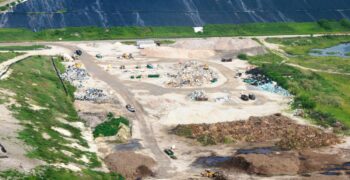
Committee 4 – Landfill
Deals with the management of controlled landfills in Europe, the calculation, verification and reporting of data, sampling of waste, and related issues under the Landfill Directive and applicable BREFs.
Committee 5 – Hazardous Waste
Deals with hazardous waste management in Europe, classification, emissions, quality standards, and safety issues in legislation and BREFs.
Subcommittee Organic Recovery
Deals with organic waste issues, composting, anaerobic digestion, or the production of fertilizers and bioenergy.
Subcommittee Shipments
Deals with issues related to the Waste Shipment Regulation and related EU legislation and guidance, the Basel Convention, the OECD Decision, and the ADR.
Necessary cookies are absolutely essential for the website to function properly. This category only includes cookies that ensures basic functionalities and security features of the website. These cookies do not store any personal information.
Any cookies that may not be particularly necessary for the website to function and is used specifically to collect user personal data via analytics, ads, other embedded contents are termed as non-necessary cookies. It is mandatory to procure user consent prior to running these cookies on your website.
Analytical cookies are used to understand how visitors interact with the website. These cookies help provide information on metrics the number of visitors, bounce rate, traffic source, etc.
Advertisement cookies are used to provide visitors with relevant ads and marketing campaigns. These cookies track visitors across websites and collect information to provide customized ads.
Performance cookies are used to understand and analyze the key performance indexes of the website which helps in delivering a better user experience for the visitors.